The Customer Journey Is No Longer a Straight Line
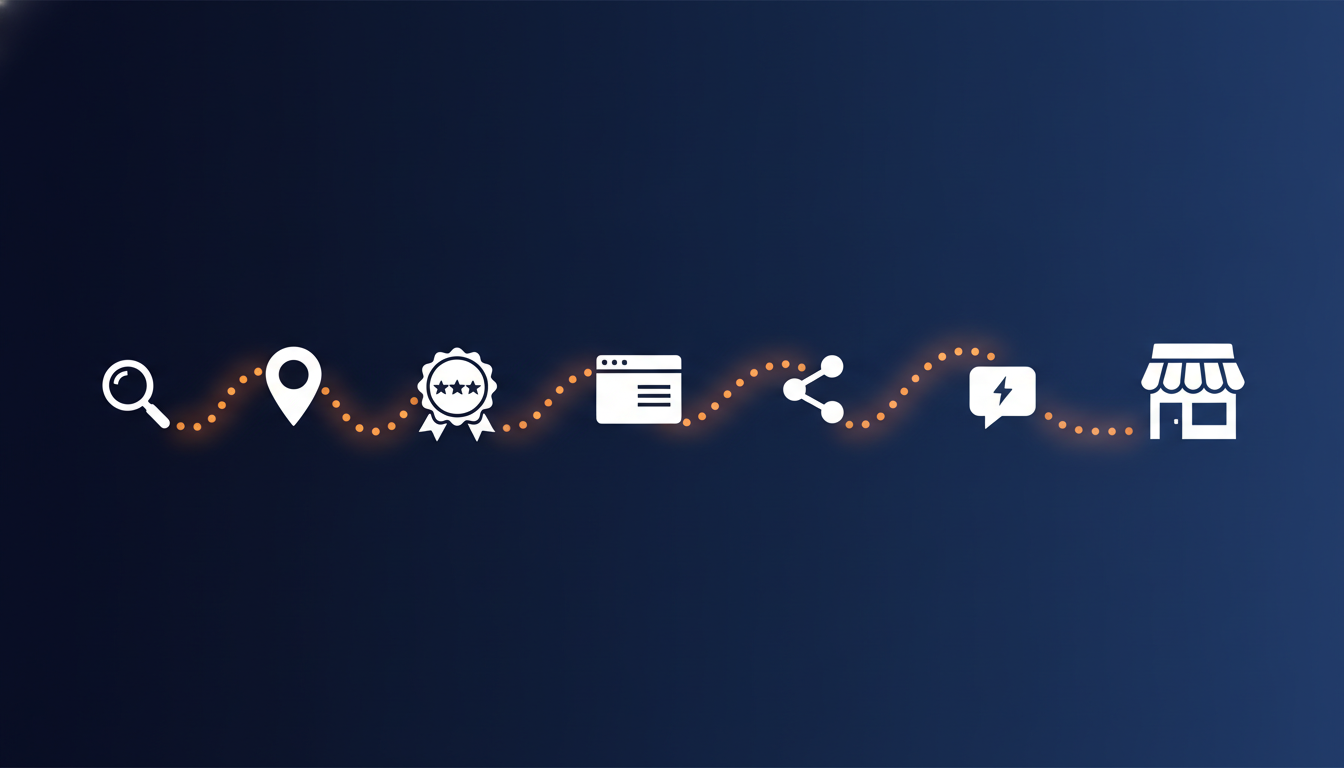
Imagine a homeowner who needs a repair. They search Google and notice a company listed in Maps, but they don't call right away. A few days later, while researching the problem further, they come across an article written by that same company. Later, the business shows up again in Google's local results. This time the name looks familiar, so the homeowner checks the reviews, visits the website, and finally picks up the phone.
Which channel gets credit for that customer?
That question is getting harder to answer, and in many cases, it's the wrong question to ask.
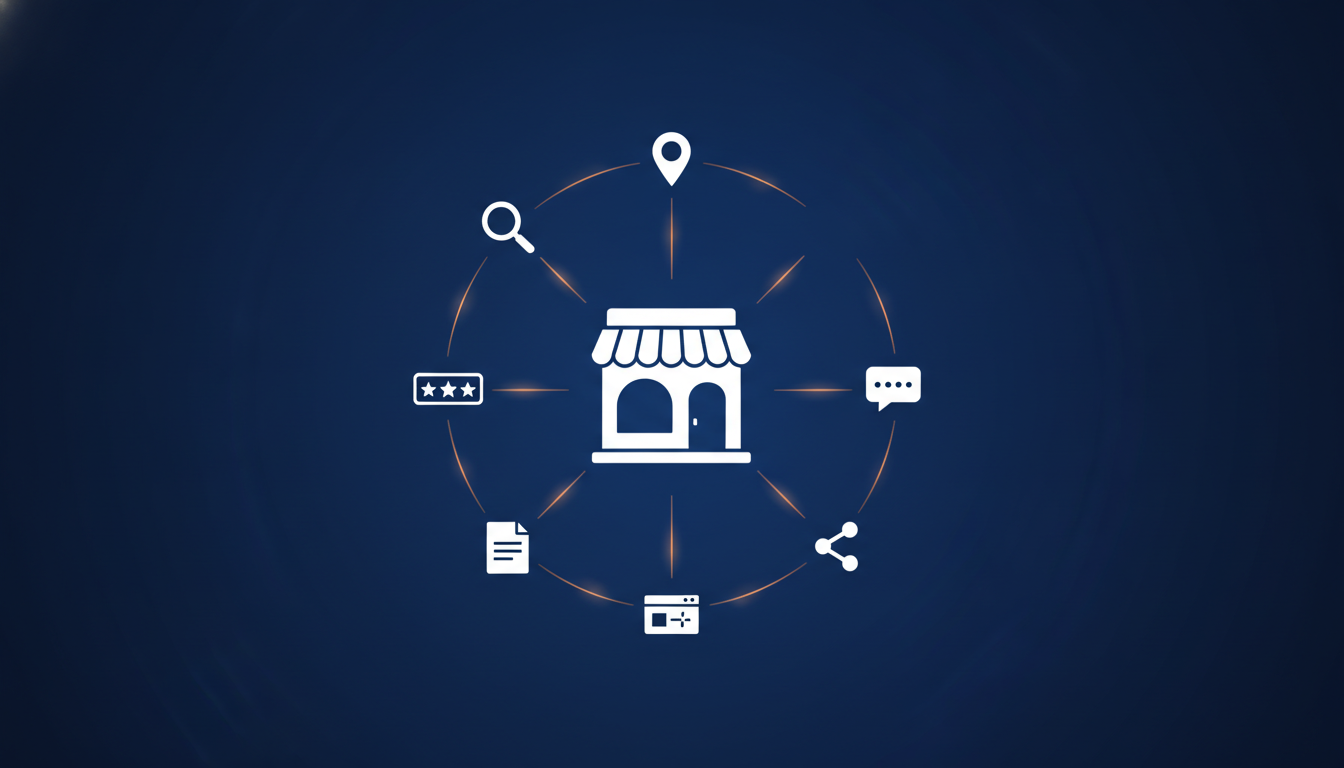
Modern search behavior is spread across Google Search, Google Maps, Google Business Profiles, social media, reviews, AI platforms such as ChatGPT and Gemini, paid advertising, organic content, referrals, and branded searches. The final click might get the attribution, but the entire system helped create the decision.
That combined effect is connected visibility.
What Is Connected Visibility?
Connected visibility is the cumulative effect created when a business consistently appears across the places customers search, research, compare, and make decisions.
Where Connected Visibility Shows Up
For a local service business, that ecosystem may include:
- Google Search
- Google Maps
- Google Business Profile
- Organic website content
- Service and location pages
- Customer reviews
- Social media
- Local citations and business listings
- Google Ads
- ChatGPT, Gemini, Perplexity, and other AI discovery platforms
- Third-party mentions and authority signals
How Small Signals Add Up to Trust
On its own, each appearance might seem minor. But together, these touchpoints build recognition, and recognition tends to grow into familiarity. That familiarity often turns into trust, and trust is usually what tips the decision toward one business over another.
This is why judging marketing performance entirely through last-click attribution can provide an incomplete picture.
Last-Click Attribution Shows the Conversion, Not Always the Influence
Traditional digital reporting often tries to credit one source for every lead: paid search generated the call, organic search generated the form submission, Google Business Profile generated the website visit. These measurements are still useful, but they rarely describe the entire path that led to the conversion.
What the Click Doesn't Show
A customer who ultimately clicks a Google ad may already have:
- Seen the company in Maps
- Read an organic article
- Visited its Google Business Profile
- Read several reviews
- Seen a social media post
- Asked an AI platform for recommendations
- Searched the business by name
The paid ad may have received the final click, but that doesn't mean it created all the trust that led to that click. Marketing attribution measures an action. Authority, on the other hand, often develops long before that action ever takes place.
Google Maps Rankings Are Part of a Larger Authority System
Local businesses sometimes focus heavily on a single measurement: where they rank in Google Maps.
Map visibility does matter. For many service businesses, it's an important source of calls, website visits, and discovery. But Maps doesn't operate independently from the rest of a company's digital presence.
What Google Actually Looks At
Google evaluates many signals when deciding which businesses are relevant to a local search. Those signals can include proximity, relevance, prominence, business information, reviews, website content, services, local references, citations, and other evidence that helps Google understand a business and how it relates to a particular search.
Why One Strong Signal Isn't Enough
That means improving local visibility is rarely about changing just one thing. A strong Google Business Profile paired with a weak website sends an incomplete signal. A strong website with little review activity creates a different kind of gap. And publishing useful local content without consistent business information or supporting authority signals can limit its broader impact.
The goal isn't simply to rank a pin on a map. It's to create enough consistent evidence that search engines and customers alike understand who the business is, what it does, where it operates, and why it deserves consideration.
PPC Captures Demand. Authority Helps Influence It.
Google Ads can be extremely effective. Someone searches for a service, sees an advertisement, clicks, and contacts the business. That is demand capture.
But paid advertising operates inside a much larger decision environment. Before clicking an ad, customers can search the company's name, examine its reviews, check its website, look at its Business Profile, compare competitors, or come across organic information about the company. Increasingly, they may also consult AI systems for answers or recommendations.
That distinction matters. Paid media captures demand that already exists, while a broader authority strategy helps create awareness, reinforce credibility, influence consideration, and improve the odds that a business is selected once that demand becomes actionable.
The two strategies don't have to compete. They can reinforce one another.
Search Is Becoming an Authority Ecosystem
Search itself is changing. Customers no longer interact only with a list of traditional search results. Google increasingly provides direct answers, local results, Business Profiles, Maps results, AI-generated summaries, videos, reviews, images, and other information before someone ever reaches a traditional website. At the same time, AI platforms are becoming another discovery layer.
A customer might ask:
- "Who is a reliable handyman near me?"
- "What does it usually cost to repair wood rot?"
- "Who repairs decks in my area?"
- "What should I look for when hiring a local contractor?"
The businesses that show up in these environments will increasingly need clear, consistent evidence across the web. AI systems and search engines need information they can understand. Customers need evidence they can trust. That makes authority a connected system rather than an isolated SEO tactic.
How Local Authority Engine Approaches Connected Visibility
Local Authority Engine was built around this shift in discovery behavior. Instead of treating SEO, Google Business Profile activity, local content, AI visibility, and distribution as unrelated marketing activities, the system connects them.
A Local Authority Engine campaign can coordinate:
Website Authority Content
Useful articles that address real customer questions, services, neighborhoods, and local intent.
Search Optimization
Structured titles, metadata, keywords, internal links, entity information, and content organization that help search engines understand the subject.
Answer-Engine Optimization
Clear explanations, questions, answers, entities, and supporting context that make information easier for AI systems to interpret.
Google Business Profile Signals
Relevant posts, services, images, business information, and ongoing profile activity.
Local Authority Signals
Geographic context that helps connect services to the communities a company actually serves.
Social Distribution
Content that extends the reach of the core authority asset and creates more opportunities for customers to come across the business.
Reviews and Third-Party Corroboration
External evidence that supports the claims a business makes about itself.
Rather than asking one channel to carry the entire burden of customer acquisition, the system works to build a stronger overall digital identity.
One Topic Can Produce Multiple Authority Signals
Consider a local home-service company publishing an article about preparing a home for fall repairs. That article can establish relevance around the service and the community it serves. A Google Business Profile post can reinforce the same subject, while a social post introduces the information to a different audience. Internal links can connect the article to relevant service pages, and reviews may provide supporting evidence around the company's work. Search engines can crawl the information, and AI platforms may discover or interpret it as well.
A homeowner may encounter one or several of those signals before ever contacting the company. That is the advantage of connected visibility: the individual pieces don't operate in isolation. They strengthen the overall evidence surrounding the business.
Measuring What Matters
This also calls for a broader view of marketing performance. Rankings remain useful. Website traffic, Google Business Profile interactions, calls, form submissions, and paid-media conversions all matter. But businesses should also watch whether the overall system is producing growth in:
- Organic visibility
- Branded searches
- Search impressions
- Google Business Profile engagement
- Qualified website traffic
- Local keyword coverage
- AI discovery and citations
- Review velocity and recency
- Lead quality
- Total qualified opportunities
- Revenue influenced by organic and local discovery
A business can improve substantially even when one individual map-grid position doesn't tell the entire story. The objective isn't to win one isolated metric. It's to increase the number of meaningful ways a qualified customer can find, trust, and select the business.
From Attribution to Authority
Marketing teams will continue to measure attribution, because businesses need to understand where leads originate. But attribution shouldn't be confused with influence. The customer who calls today may have first encountered the business weeks earlier. The Google ad receiving credit for the conversion may have been supported by dozens of other authority signals, and the map listing that generated the call may have been strengthened by the website, reviews, content, citations, and business information surrounding it.
The conversion is an event. Authority is built over time. For local businesses competing in an increasingly AI-driven discovery environment, that distinction is becoming more important.
The businesses that succeed won't simply appear in one channel. They will create enough consistent evidence across search, Maps, content, reviews, social media, paid media, and AI discovery to become easier to find, easier to trust, and easier to recommend.
Be found. Be trusted. Be recommended.
Frequently Asked Questions
What is connected visibility in local marketing?
Connected visibility is the combined presence a business creates across Google Search, Maps, Google Business Profile, website content, reviews, social media, paid advertising, AI platforms, and other discovery channels. These signals can reinforce one another throughout the customer journey.
Why is last-click attribution becoming less reliable?
Last-click attribution identifies the final measurable interaction before a conversion. It may not capture earlier searches, reviews, content, Maps appearances, social interactions, or AI recommendations that influenced the customer's decision.
Do Google Maps rankings still matter?
Yes. Google Maps remains an important discovery channel for local businesses. However, map visibility should be considered alongside the broader authority signals supporting the business, including its website, reviews, services, relevance, prominence, and local information.
Is Local Authority Engine a replacement for Google Ads?
No. Paid search and authority marketing perform different roles. Google Ads can capture existing demand, while an authority strategy can build awareness, credibility, organic discovery, and trust before a customer is ready to convert.
How does content help a local business appear in AI search?
Well-structured content gives AI systems additional information about a business's expertise, services, geographic relevance, and answers to common customer questions. AI visibility depends on many signals, so content works best as part of a broader authority system.
What should local businesses measure besides rankings?
Businesses should consider organic impressions and traffic, Google Business Profile engagement, branded searches, reviews, qualified leads, local keyword visibility, AI discovery, conversion activity, and revenue in addition to individual rankings.
Why does consistency matter across Google, a website, and social media?
Consistent information provides customers and digital platforms with corroborating evidence about what a business does, where it operates, and what subjects it has authority around. Conflicting or incomplete information can make that understanding more difficult.
What is the goal of Local Authority Engine?
Local Authority Engine is designed to create coordinated authority signals across traditional search, local discovery, and AI-driven discovery so local businesses have more opportunities to be found, trusted, and recommended.